Iran Denies Deal To End Strait Of Hormuz Closure
Iran’s Fars News Agency denied reports of a deal to reopen the Strait of Hormuz, saying vessels need Revolutionary Guards approval to pass

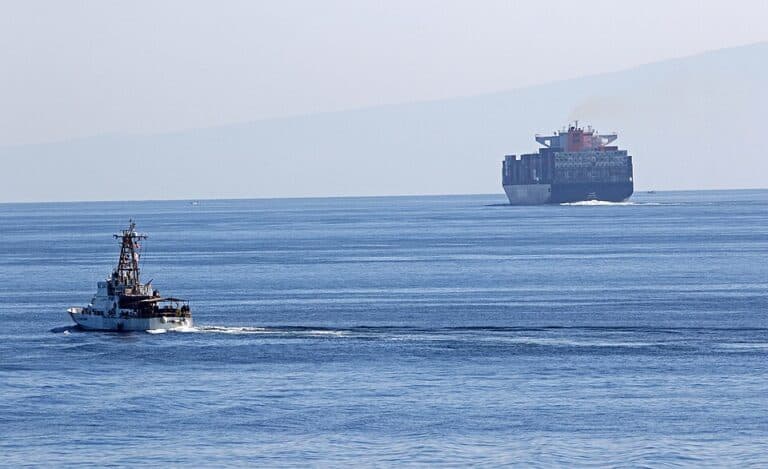
The Strait of Hormuz closure remains in place, according to Iran’s Fars News Agency, which denied reports that a plan had been reached to reopen the critical maritime route.
Fars cited a source close to Iran’s nuclear negotiation team, who said no agreement had been reached regarding the opening of the Strait of Hormuz. The source said reports published on the matter were inaccurate.
A senior military source added that, as long as the United States continues what Iran calls “hostile actions,” the Strait of Hormuz will remain closed. The source said vessels would only pass through a pre-designated route and with approval from the Revolutionary Guards Navy.
The Tanakh says, “You shall not move your neighbor’s boundary.” That verse gives this story its strategic frame. Freedom of passage, sovereign limits, and lawful order matter when hostile regimes try to turn shared routes into tools of coercion.
Strait Of Hormuz Closure
For the United States, Iran’s statement raises a direct deterrence problem. The Strait of Hormuz is not only an Iranian issue. It is one of the world’s most sensitive maritime corridors. When Tehran claims authority to close it, restrict it, or require IRGC approval for vessels, it challenges international movement, energy security, and American credibility.
Washington must now weigh more than diplomatic language. It must consider whether Iran is using the strait as leverage in nuclear talks, military escalation, and regional pressure against U.S. partners.
For Israel, the issue is also serious. Israel does not sit on the Strait of Hormuz, but Iran’s control of maritime pressure affects the entire regional balance. If Tehran can threaten shipping routes with limited consequences, it may feel more confident using the same pressure system through Hezbollah, the Houthis, Iraqi militias, and other proxies.
Hormuz Route Pressure

This development also sharpens the relevance of “Iran Blocks Ships On Omani Route In Hormuz.” Iran claimed it turned back ships using the southern Omani route in Hormuz, raising new concerns for U.S. deterrence, Israel, and maritime security.
Together, the reports show a consistent Iranian posture, Tehran is not only warning about Hormuz. It is claiming practical control over how vessels move, which routes they use, and whether the Revolutionary Guards approve their passage.
That matters because Iran often combines military pressure with negotiation messaging. One source speaks about nuclear talks. Another source speaks about naval control. The result is a single pressure campaign aimed at Washington and its allies.
For Israel, that pattern is familiar. Iran uses different instruments for the same goal: leverage, intimidation, and strategic delay.
Covenant Of Open Routes And Resolve
The United States and Israel share a covenantal understanding before God rooted in freedom, lawful order, protection of life, and resistance to violent coercion.
America’s covenantal tradition emphasizes liberty under God, secure commerce, and the defense of allies against intimidation. Israel’s covenant is ancient and unique, rooted in the God of Israel, Torah, Jewish peoplehood, and the return to the land.
America cannot allow Iran to treat a global maritime artery as a private checkpoint for the Revolutionary Guards. Israel cannot ignore a regional enemy that uses seas, borders, tunnels, and proxies to surround free nations with pressure.
Ultimately, Iran’s denial of a reopening agreement shows that the Hormuz crisis remains unresolved. The central question is not only whether ships can pass. The real question is whether the United States and its allies will allow Iran to redefine regional order through threats, closures, and IRGC control.
For more stories on Israel, faith, and the values behind the headlines, follow Sinai on Facebook and Instagram.
Discussion0
No comments yet — be the first to share your thoughts.