Pentagon Races To Rebuild Missile Stockpiles
The Pentagon is pressing U.S. defense companies to expand weapons production after the Iran war sharply depleted Patriot and THAAD interceptor stockpiles

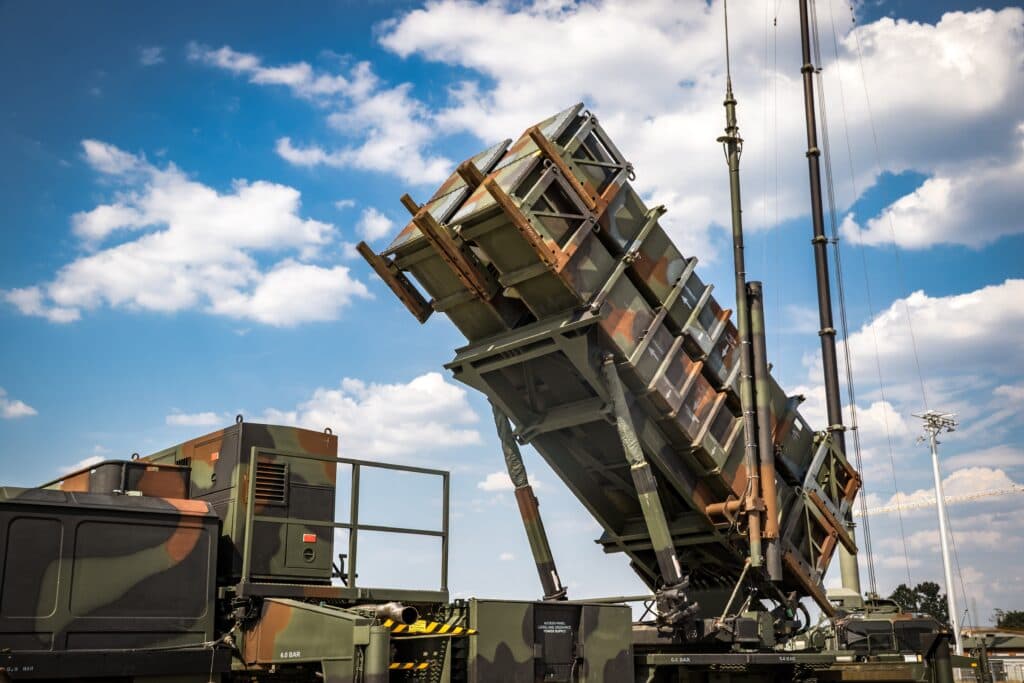
Pentagon missile stockpiles have fallen sharply after the war with Iran, according to a Washington Post report, pushing the Defense Department into an urgent effort to accelerate American weapons production.
The report said U.S. defense companies were given 21 days to submit plans for increasing supply, expanding production facilities, and raising overall capacity. The concern is especially acute around air defense interceptors, the missiles that protect American forces, allies, bases, and regional infrastructure from incoming attacks.
According to the report, the Patriot missile stockpile dropped from about 2,200 to fewer than 827. The THAAD interceptor stockpile fell from 452 to fewer than 278. Those numbers help explain why the Pentagon is pressing the defense industry to move faster. Modern war consumes interceptors at a pace that peacetime production lines were not built to sustain.
The Tanakh says, “Prepare your work outside, and make it ready for yourself in the field.” The verse fits the moment because defense cannot begin when the skies are already full of missiles. Preparedness has to come before the next wave, not after it.
The Arsenal Becomes Part Of The Battlefield
The Pentagon is reportedly advancing major deals to rebuild capacity, including a $58.6 billion agreement with Lockheed Martin. Still, a significant part of the production expansion depends on approval of a $1.15 trillion defense budget bill, which remains stalled in Congress.
That delay turns Congress into part of the strategic equation. The issue is not only whether America has advanced weapons. It is whether the United States can replace them quickly enough after a major exchange with Iran or its proxies. Enemies study that timeline closely. A gap between battlefield consumption and factory output can weaken deterrence before a new war even begins.
This also gives added context to “Trump Delays Iran Strike As IRGC Threatens Israel And Britain.” Trump is reportedly delaying a large-scale Iran strike after military warnings, as the IRGC threatens Britain, Gulf states, and Israel. In that light, restraint does not read simply as hesitation. It can also reflect a hard military calculation about stockpiles, readiness, and the cost of opening another phase before the arsenal is restored.
Israel will read the Washington Post report through its own security reality. The Jewish state has built one of the world’s most advanced air defense systems, but the broader regional shield still depends heavily on American industrial strength. Patriot and THAAD stockpiles affect U.S. deployments, joint planning, Gulf defense, and Washington’s ability to support allies during simultaneous crises.
The Iran war also exposed a deeper truth about modern deterrence. Missiles, drones, and rockets are no longer rare weapons held for last-resort escalation. Iran and its proxies treat them as central tools of pressure. Hezbollah, Hamas, the Houthis, and other Iranian-backed forces all rely on volume, persistence, and the hope that defenders eventually run short.
Covenant Of The Shield And The Workshop
The United States and Israel share a covenantal understanding before God that treats the defense of life as a sacred responsibility, not merely a technical function of government. America’s covenantal tradition speaks through liberty under God, national responsibility, and the duty to defend allies against tyranny. Israel’s covenant is older and unique, rooted in the God of Israel, Torah, Jewish peoplehood, sovereignty, and the return to the land.
Here, that covenantal responsibility is measured in factories, budgets, interceptors, and time. The shield in the sky depends on the workshop on the ground. A nation that wants peace must still build the capacity to stop those who choose war.
The Pentagon’s pressure campaign now asks whether the United States can rebuild at the speed required by the threats it faces. For Israel, the question is not abstract. Every interceptor can mean a city protected, a base preserved, or a wider war prevented.
The Iran war showed that air defense can buy time, but endurance comes from production. If Washington can replenish quickly, it strengthens American credibility and gives Israel and other allies more room to maneuver. If the process stalls, hostile regimes will notice the gap and plan accordingly.
For more stories on Israel, faith, and the values behind the headlines, follow Sinai on Facebook and Instagram.
Discussion0
No comments yet — be the first to share your thoughts.