U.S. Hormuz Operations: IRGC Calls America a ‘Fuel Smuggler’
Sinai Desk
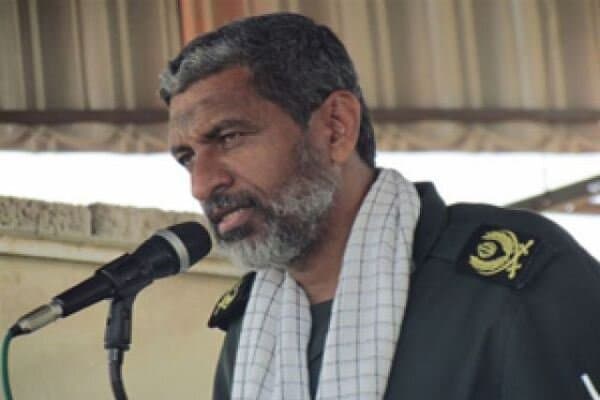
U.S. Hormuz operations drew fresh ridicule from Iran on Monday as the commander of the Islamic Revolutionary Guard Corps Navy mocked Washington’s efforts to protect commercial tankers. Brigadier General Ali Ozmaei claimed the United States had effectively become a “fuel smuggler” by helping ships cross the contested waterway.
According to Iran’s state-run Press TV, Ozmaei said Washington now commits fighter aircraft and drones to move a limited number of tankers through the strait. He cited F-35, F-16 and F-18 fighters, along with MQ-9 and MQ-1 drones. He portrayed the mission as evidence of American “humiliation” and “desperation.”
The rhetoric comes during a sharp escalation around Hormuz. Tanker attacks recently reached their highest weekly level since the Iran war began. Commercial traffic has also fallen sharply as Iran attempts to control unauthorized routes through the strait.
First Kings 20:11 offers a warning against premature military boasting: “Let not him who girds on his armor boast like him who takes it off.” The ancient admonition is particularly relevant to a confrontation where both military power and information warfare shape perceptions of victory.
U.S. Hormuz Operations Keep Tankers Moving
Whatever Tehran’s characterization, the American operation has a concrete purpose. U.S. Central Command launched Project Freedom in May to restore commercial navigation through Hormuz. CENTCOM said the mission included guided-missile destroyers, more than 100 aircraft and multi-domain unmanned systems.
CENTCOM commander Adm. Brad Cooper said the operation used a layered defensive network. He listed F-16, F-18 and F-35 fighters among the aircraft involved. He also described U.S. destroyers, carrier groups, helicopters and surveillance platforms operating around the strait.
That earlier official disclosure broadly supports Ozmaei’s description of extensive American airpower. However, his claim that Washington avoids using its own vessels requires more caution. CENTCOM has explicitly acknowledged U.S. destroyers and other warships operating as part of the defensive umbrella. Recent reporting has also described continued U.S. naval protection for commercial shipping.
American forces have helped move enormous amounts of energy through the waterway. CENTCOM said in July that it had already facilitated roughly 900 commercial vessel transits and 450 million barrels of crude oil since early May. More recent reporting says that total has continued rising.
The mission has become more dangerous as Iran increases pressure on maritime traffic. Reuters reported last week that Iran was threatening to block oil routes it had not authorized. Attacks, attempted attacks and harassment of commercial vessels have also intensified.
Tehran Turns Maritime Pressure Into Propaganda
Ozmaei’s remarks fit a wider Iranian effort to portray control of Hormuz as proof that American military power has failed. Iranian media have repeatedly claimed that the IRGC now controls passage through the strait. Ozmaei has also threatened destruction for vessels attempting what Tehran calls unauthorized crossings.
Yet the strategic picture is more complicated. Iran has clearly imposed major costs on commercial shipping and forced Washington to devote substantial military resources to the waterway. At the same time, tanker and LNG traffic continues under U.S. protection despite repeated attacks. September LNG shipments reached their highest monthly level since the conflict began.
That makes the phrase “fuel smuggler” less a neutral description than part of Tehran’s information campaign. Washington describes the same mission as protecting freedom of navigation and global commerce. CENTCOM has said Iran’s attacks threaten civilian mariners and an international trade route used by countries far beyond the United States.
The stakes are enormous because Hormuz historically carried roughly one-fifth of global oil and gas shipments. Recent Iranian pressure has driven up freight, insurance and crew costs. Tanker captains have reportedly received offers reaching $100,000 per month to make dangerous crossings.
The confrontation also follows Tehran’s expanding threats against American and Gulf infrastructure. In “Iran Threatens Gulf Data Centers, AI Sites if War Resumes,” Mohsen Rezaee warned that communications cables, data centers and U.S. assets near Hormuz could become targets in another escalation. Ozmaei’s latest statement adds maritime ridicule to that broader pressure campaign.
Israel has a direct interest in the outcome. Iran’s ability to dominate Hormuz would give Tehran leverage over energy markets and U.S. allies across the Gulf. It could also strengthen a regime already confronting Israel through missiles, drones and regional armed groups.
Washington faces a different but closely connected challenge. Keeping Hormuz open protects energy markets, allied economies and the principle that one state cannot unilaterally dictate passage through a strategic international waterway. Every successful transit therefore carries economic and geopolitical significance beyond the individual tanker.
Strength at Sea and the Duty to Defend
Israel’s covenantal mission before God requires the Jewish state to preserve sovereignty and protect its people from hostile powers. Iran’s maritime strategy matters because economic pressure, missile warfare and attacks on allies form part of the same regional confrontation. Deterrence therefore extends beyond Israel’s immediate borders.
America’s covenantal mission developed through a different national story. Its maritime tradition has long connected military power with freedom of commerce and navigation. Protecting civilian shipping through Hormuz places that principle into direct conflict with Tehran’s effort to control the passage by force.
Iran can describe American tanker protection as humiliation. Washington can present it as evidence that U.S. power keeps global commerce moving. The strategic test is not which side produces the sharper slogan.
The harder measure is whether ships can continue to pass, whether crews survive the journey and whether Iran can convert military pressure into permanent control of Hormuz. For now, that contest remains unresolved.
For more stories on Israel, faith, and the values behind the headlines, follow Sinai on Facebook and Instagram.
Discussion0
No comments yet — be the first to share your thoughts.