Trump’s Hormuz Transit Fee Was Months In The Making
Trump’s proposed Hormuz transit fee reportedly developed over months before shifting into Gulf investment deals, with major implications for America, Israel, and Iran

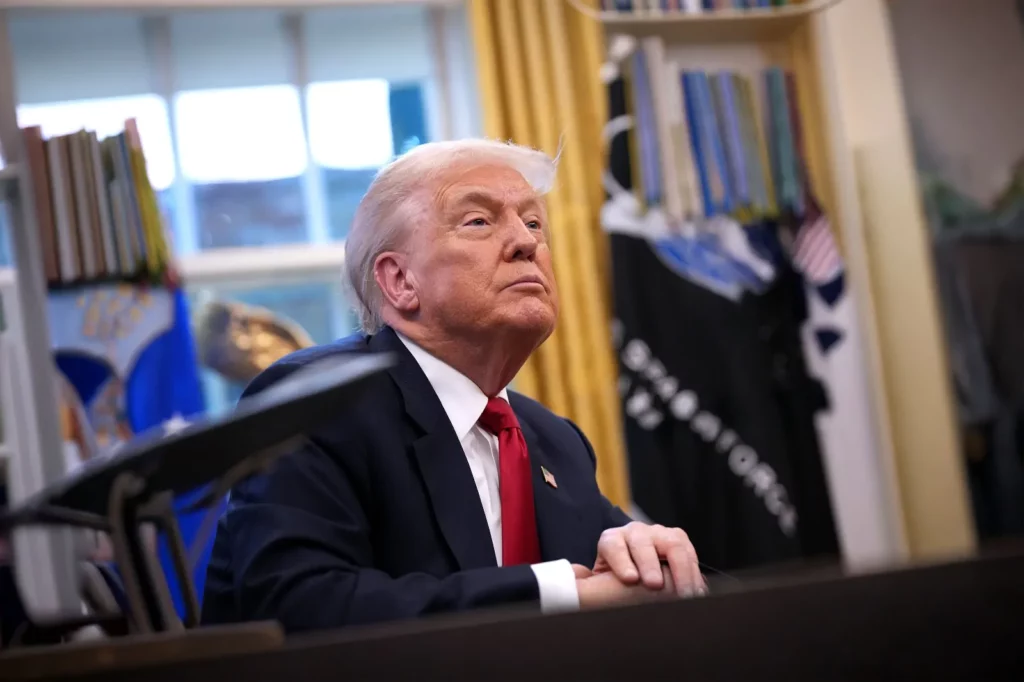
Trump’s Hormuz transit fee was reportedly months in the making, according to a Semafor report that said the president had pushed the idea privately before making it public.
A White House official told Semafor that Trump was “very serious” about the proposal and viewed it as a long-held instinct rather than a sudden decision.
The proposal called for a 20% fee on cargo moving through the Strait of Hormuz. Trump framed it as reimbursement for the United States, which has spent decades protecting one of the world’s most important energy corridors.
The Tanakh says, “The laborer is worthy of his wages.” That principle does not answer every legal question about international waterways. However, it does capture the argument Trump is making: America should not carry the cost of global security alone while others benefit.
Hormuz Transit Fee Debate
The plan quickly raised practical and legal questions. Semafor reported that officials had not yet clarified how the fee would work, and whether Gulf governments had been consulted.
The report also noted tension inside the administration, since Vice President JD Vance had said international waterways should remain toll-free, while Secretary of State Marco Rubio had joined a Gulf Cooperation Council statement opposing outside fees or control over Hormuz.
Trump later shifted course. Reuters reported that he dropped the 20% fee plan and said the United States would instead pursue trade and investment deals with Gulf states. He also said the Strait of Hormuz would remain open to all ship traffic except ships tied to Iranian ports or Iranian cargo.
That change gives the policy a more strategic frame. Rather than charging every ship directly, Trump is trying to convert America’s security role into long-term Gulf investment inside the United States.
For America, the impact could be significant. If Gulf states invest more in U.S. factories, plants, and equipment, the policy could support domestic jobs while reinforcing America’s role as the main guarantor of Gulf security.
Why Israel Is Watching
For Israel, the Hormuz debate is not just about shipping fees. It is about Iran, deterrence, and the balance of power across the Middle East.
That issue connects directly to “Trump Vows U.S. Control Of Hormuz, Iran Warns Region.” Trump said the U.S. will control and guard the Strait of Hormuz, while Iran warned regional countries against helping American forces.
Israel benefits when Iran loses the ability to threaten maritime routes, intimidate Gulf states, or use energy pressure against the West. A stronger American posture in Hormuz can also support Israel’s campaign against Iran’s wider terror network, including Hezbollah, Hamas, and the Houthis.
At the same time, the American debate matters. If the policy appears too unclear, adversaries can exploit confusion. However, if Washington turns the idea into a clear burden-sharing framework, it could strengthen both deterrence and U.S.-Gulf alignment.
Covenant, Sea Lanes, And Burden Sharing
The United States and Israel share a covenantal understanding before God that gives power a moral purpose.
Both nations were built on the belief that freedom is not an accident, that justice requires courage, and that evil cannot be allowed to rule through fear. America carries a calling to defend liberty under God. Israel carries the ancient calling of Jewish return, sovereignty, and national life in the land promised to the Jewish people.
In this story, those shared values meet in the Strait of Hormuz.
America uses its military strength to protect trade routes, allies, and energy flows. Israel stands on the front line against the same Iranian regime that threatens those routes and funds terror across the region.
That shared responsibility does not erase hard questions about law, markets, or policy design. However, it does clarify the stakes. The free world cannot allow Iran to turn global shipping into a weapon.
For Israel, the key test is whether the policy weakens Iran and strengthens America’s regional role. For the United States, the test is whether Trump can turn a controversial fee idea into a durable economic and security framework.
Ultimately, Hormuz is more than a waterway. It is a test of American leadership, Gulf alignment, Iranian deterrence, and the U.S.-Israel alliance in a region where weakness carries a high price.
For more stories on Israel, faith, and the values behind the headlines, follow Sinai on Facebook and Instagram.
Discussion0
No comments yet — be the first to share your thoughts.