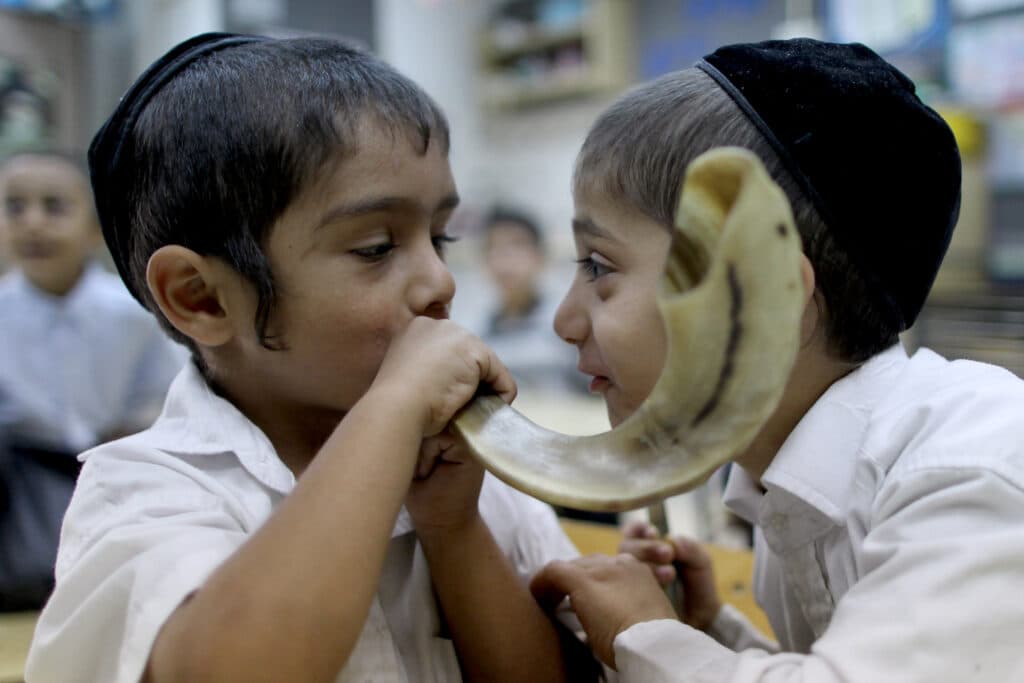

Jewish Children blowing the Shofar | Photo by Nati Shohat / Flash90
Takeaways
- Every year, Jewish tradition marks a hidden month when heaven feels closer than usual.
- That month is called Elul, and it comes right before the Jewish new year.
- A famous teaching says God leaves His throne room and walks into the fields to meet ordinary people.
- You don’t need permission, robes, or a title to approach Him there.
- This one image can completely change how you picture God’s nearness in your own life.
What Even Is Elul?
Have you ever heard of a month named Elul? Most people outside Jewish tradition haven’t, and that’s understandable, since it comes from the Jewish calendar rather than the one on your kitchen wall.
Elul is the last month of the Jewish year, a 29 day stretch that leads straight into Rosh Hashanah, the Jewish new year. Jewish tradition ties its holiness back to Moses, who climbed Mount Sinai on the first day of Elul to receive a second set of stone tablets after the incident with the golden calf. That climb ended, weeks later, with God’s forgiveness. So Elul became known as a season soaked in mercy.

So What Is “The King Is in the Field”?
Here’s where it gets beautiful. A teacher named Rabbi Schneur Zalman of Liadi described God as a king who normally lives in a palace. Want an audience with a king? You’d need an appointment, the right clothes, and someone important to vouch for you.
But during Elul, Jewish tradition says the King (God) steps outside the palace walls. He walks into the open fields where farmers are working, where ordinary life is happening, and He simply stands there. Anyone can walk up and talk to Him. No appointment required.
📖Read here about why some Jews wake up before dawn to say the ancient prayers of Selichot every day of Elul.
Why Would a King Do That?
Picture a field worker, dusty and tired, suddenly noticing the king strolling past his row of crops. That worker doesn’t need credentials. He just needs to look up.
This single image flips the whole idea of access to God on its head. Instead of God waiting behind locked doors for the worthy few, Jewish tradition pictures Him walking toward regular people first.
A Line Worth Memorizing
The Hebrew letters of the word “Elul” are traditionally read as an acronym for a phrase from Song of Songs: “Ani l’dodi v’dodi li”, meaning “I am my beloved’s, and my beloved is mine” (Song of Songs 6:3). It’s a short line, but it carries an entire theology of mutual devotion inside four Hebrew letters.
Fun Facts You Probably Didn’t Know
- The shofar, a ram’s horn trumpet, is blown every weekday morning during Elul as a wake up call for the soul.
- Elul falls in late summer, usually August or September on our calendar.
- Increased charity and Torah study are traditional Elul practices, alongside daily self reflection.
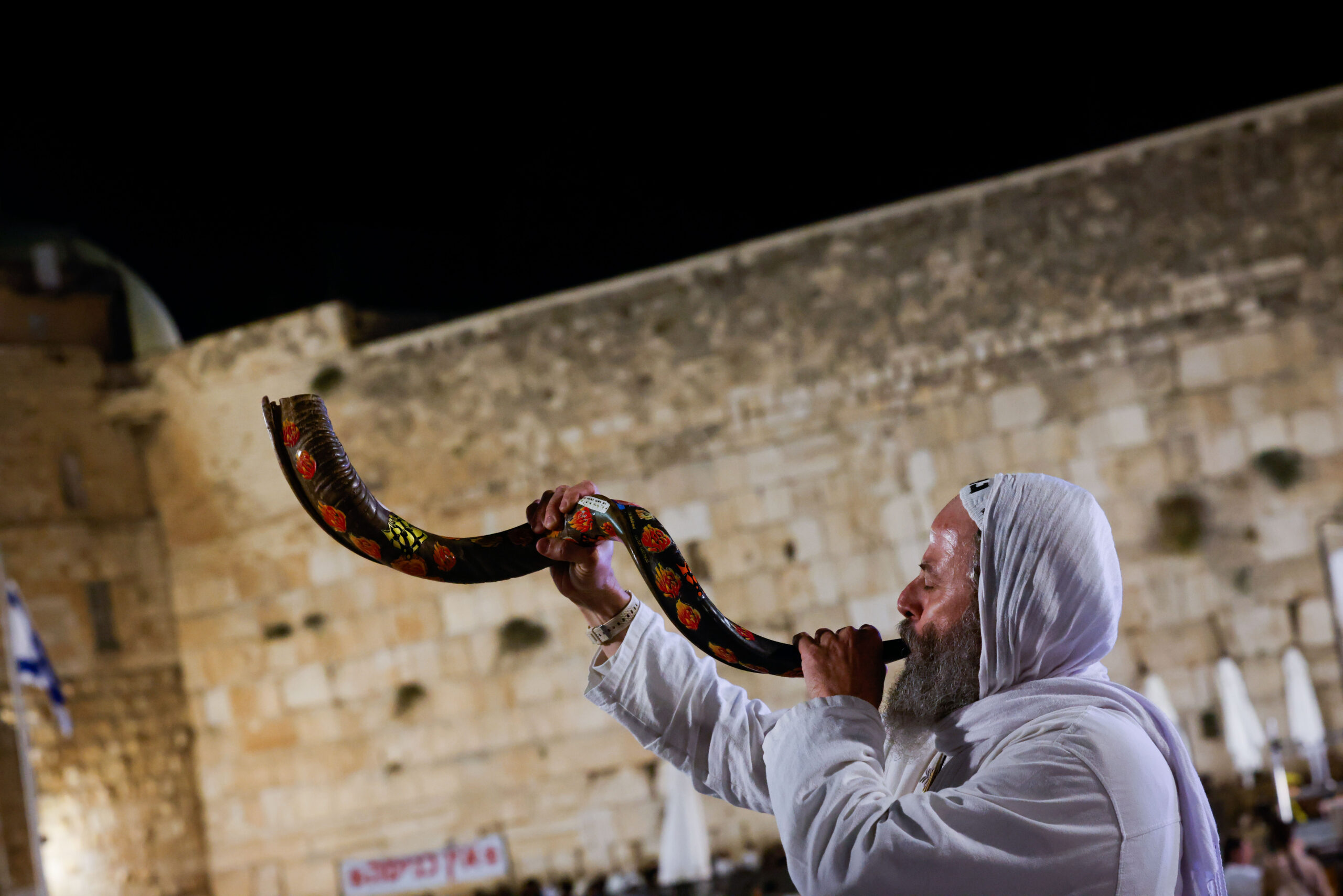
A Jewish man blows a shofar horn as Jews arrive for a forgivness prayer (Selichot), at the Western Wall in the Old City of Jerusalem, October 9, 2024, two days before Yom Kippur, the most important day in the Jewish calendar | Photo: Chaim Goldberg/Flash90
What Happens After the Field?
Jewish tradition doesn’t stop at the field. Once the King has greeted everyone there, the people walk back to the city with him, right into the palace, carrying that closeness into the more solemn days of judgment that follow on Rosh Hashanah and Yom Kippur.
Why This Speaks to the Rest of Us
If God is willing to leave a palace and stand in a field, what does that say about where He’s willing to meet you? Maybe it’s your kitchen table at 6am. Maybe it’s your commute.
This one Jewish image, born from centuries of tradition, offers a strikingly warm answer: the King isn’t waiting for you to arrive somewhere holy. He’s already out here, in the field, ready to hear you.
Want to keep reading? Click here for a fascinating article on why some Jews avoid photos on Shabbat. Explore more on faith, values, and the Land of Israel at Sinai Project.
Discussion0
No comments yet — be the first to share your thoughts.