
From Progressive to Realist: How October 7 Changed One Professor’s View of Academia

Magazine
·14:28
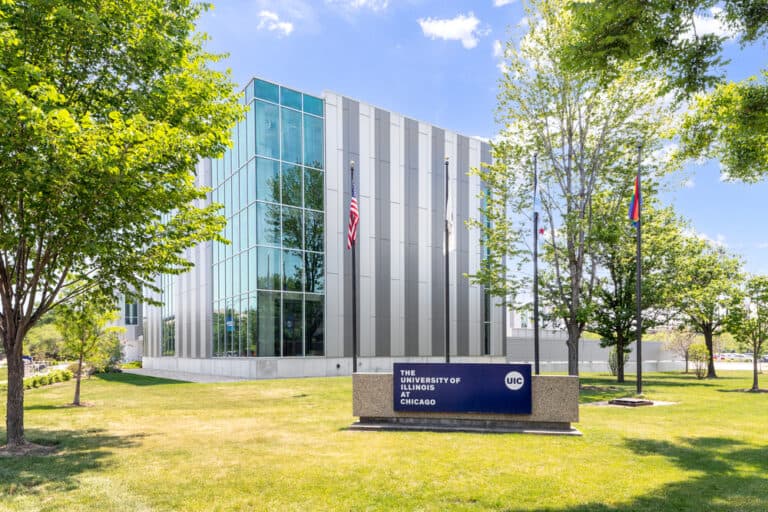
University of Illinois at Chicago | Photo: Shutterstock
Takeaways:
- Barbara Risman spent 17 years at UIC before she decided she couldn’t stay.
- She called the campus climate after October 7 “alienating” and quit her department affiliation.
- The ADL documented professors who called Hamas’s attack “heroic” or an “achievement.”
- A Columbia professor resigned in protest after the school let a colleague who praised the attack keep teaching.
- Risman’s story fits a wider pattern some now call de-lefting.
Barbara Risman spent almost two decades building a career at the University of Illinois at Chicago. She co-chaired the faculty equity committee for over ten years. She was, by her own description, a lifelong progressive.
Then October 7 happened. And the community she’d given her career to stopped feeling like home.
Who Is Barbara Risman?
Risman is a distinguished sociology professor who taught at UIC for 17 years. She wasn’t a fringe figure. She was embedded in the university’s social justice culture, tied closely to the Department of Women and Gender Studies.

That’s what makes her story land. This wasn’t a conservative critic taking a shot at the left. This was one of their own, watching the ground shift under her feet.
What Happened at UIC After October 7
Days after Hamas killed roughly 1,200 people and took 252 hostages, UIC’s Women and Gender Studies and Black Studies departments posted a joint statement. It expressed concern for Palestinian and Muslim students. It denounced “settler colonial violence.”
It didn’t mention antisemitism. It didn’t mention the hostages. It didn’t mention Jewish students at all.
Risman was on sabbatical in Paris, watching from a distance. She later wrote that the experience was “heartbreaking and alienating,” and she resigned her affiliation with the department soon after. She asserted, “UIC is no longer an institution comfortable for me, as a Jew who believes Israel has a right to exist.”
📖 Read this article on a woman whose faith journey took her from antisemite to fierce Israel advocate.
From Micro-Aggressions to Institutional Antisemitism
Risman didn’t throw that phrase around lightly. She’s a sociologist. Words matter to her.
She wrote that when university departments publish statements implying support for the destruction of the world’s only Jewish state, home to more than half the Jews alive today, they’ve “crossed the line from simple micro-aggressions… to outright institutional antisemitism.”
In a later interview she put it even more plainly: “When it comes to Jews, they do not care.”

She Wasn’t Alone: Professors Who Praised the Attack
Risman’s alienation didn’t come from nowhere. The ADL documented multiple U.S. professors who celebrated October 7 in explicit terms. Cornell’s Russell Rickford told a rally that Hamas had “punctured the illusion of invincibility.” A UC Merced professor called Hezbollah’s terrorism a form of anti-imperialism.
At Columbia, a Jewish professor named Lawrence Rosenblatt resigned after the university let a colleague accused of calling the attack “awesome and astounding” continue teaching a course on Zionism. He wrote that Columbia had “lost not only its moral compass, but its intellectual one.”
Is De-Lefting a Real Movement?
Some observers have started using the term de-lefting to describe what happened to professors like Risman: longtime progressives quietly stepping back from a movement they no longer recognize, not because their values changed, but because the movement’s response to Jewish suffering exposed something they couldn’t unsee.
It isn’t an organized movement with a name and a leader. There’s no headquarters. But the pattern keeps showing up: professors, writers, and activists across the country describing the same moment of realizing their political home had no room for their grief.
Why Risman’s Story Matters
Risman chose early retirement over silence. Not everyone can afford that choice, and not everyone should have to make it.
Her story matters because it shows this was never only a political disagreement about the Middle East. It was a test of whether institutions built on compassion and justice could extend that compassion to Jews too. For a lot of people watching Israel closely right now, that test result has been clarifying.
Want to keep reading? Read here to discover 6 powerful ways you can show your support for Israel today. Explore more on faith, values, and the Land of Israel at Sinai Project.
Discussion0
No comments yet — be the first to share your thoughts.