
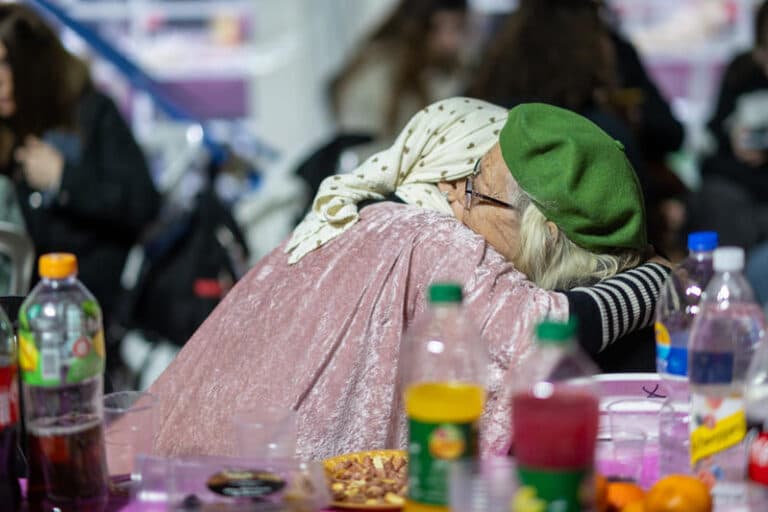

People visit the mourning tent (Shivah) of late Israeli soldier Sergeant Sergeant Eliav Astuker who fell in battle in the Gaza Strip, in Holon, January 14, 2025. Photo by Dor Pazuelo/Flash90 *
Takeaways:
- Shivah is seven days of mourning that begins right after burial.
- The word itself just means “seven” in Hebrew.
- Mourners stay home, sit low, and let the community come to them.
- The custom traces all the way back to Jacob’s family in Genesis.
- Grief here isn’t rushed. It has a shape, and that shape helps people heal.
A colleague’s mother passed away last spring, and when I showed up at his door, he was sitting on a low stool in the corner of his own living room. He looked exhausted but somehow steady. It took me a minute to realize that low stool wasn’t an accident. It was tradition, and it goes back further than most people would guess.
Where the Word Comes From
Shivah simply means “seven” in Hebrew, and it refers to the seven days of mourning that begin immediately after burial. Not after the funeral announcement. Not after the news sinks in. After the body is in the ground.
That detail matters more than people realize. Burial is treated as the real turning point, the moment grief officially gets room to breathe.

It’s Older Than You’d Think
This isn’t some modern grief-counseling invention. Genesis 50:10 describes Joseph mourning his father Jacob for seven days, and Jewish tradition points to this moment as the root of the practice. People have been doing some version of this for thousands of years.
I find that oddly comforting. When my own grandmother passed, sitting shivah didn’t feel like following a rulebook. It felt like joining something ancient, something bigger than my own small grief.
📖 Ever wondered why Jews have mezuzas on their doorposts? This article breaks down what they mean.
What Actually Happens During Shivah
Mourners stay home for the full seven days. They sit on low chairs or even the floor, skip shaving, avoid leather shoes, and don’t do laundry. Work basically stops.
None of this is about punishment. It’s about making the outside world match the inside world for a little while. Grief doesn’t wait for a convenient schedule, so the household stops pretending everything is normal.
Prayer services happen right there in the home, often with a minyan gathering daily. The house itself becomes sacred ground for a week.
Why Everyone Just Shows Up
Visiting a mourner during shivah is considered a mitzvah, something called nichum aveilim, comforting the mourners. Nobody waits for an invitation. People just come.
I used to think that was intrusive until I sat shivah myself. Silence from a visitor is allowed. Expected, even. Sometimes someone would sit across from me for twenty minutes and say almost nothing, and it helped more than any speech could have.

Life After the Seven Days
Shivah ends, but grief doesn’t just stop on cue. Sheloshim, a thirty-day period of lighter mourning, follows right after. For someone who lost a parent, mourning customs stretch out even further, closer to a full year.
The point is simple. Mourning gets structure here, not a shortcut. Grief is allowed to slow down, then slow down again, in stages that actually match how healing works.
What’s Happening on the Soul’s Side
Here’s the part that surprises most people. Jewish tradition teaches that the soul mourns too, right alongside the family, for that same seven-day window. The Talmud describes the soul grieving the fact that it must now separate from the body it worked alongside for a lifetime, learning Torah and doing good deeds together.
There’s another layer worth sitting with. The world itself was formed in seven days. Many teachers point out that when a soul returns to its Source, that departure mirrors the same seven-day cycle, only in reverse. The seven days of shivah aren’t just about the family adjusting. They’re about the soul making its own quiet journey home.
That reframes the whole week. The mourners on the low stools and the soul above are, in a sense, moving through something together.
3 Shivah Facts You Probably Never Knew
- Visitors don’t say “hello” walking in or “goodbye” walking out. People just sit down.
- A memorial candle burns nonstop for the entire seven days, no exceptions.
- Before the burial, mourners tear an actual piece of clothing. It’s called keriah.
Grief Has It’s Time and Place
There’s a small custom that often gets overlooked. On the morning shivah ends, mourners step outside for a short walk around the block before returning to daily life. It only takes a few minutes, but it marks the first steps back into the world.
Grief still carries weight in Jewish tradition. It has a time and place. It just doesn’t get the final word.
Want to keep reading? Click here for a fascinating article on why Jews have strings handing from their shirts. Explore more on faith, values, and the Land of Israel at Sinai Project.
Discussion0
No comments yet — be the first to share your thoughts.