Mecca Defense Agreement Holds First Meeting
Turkey, Saudi Arabia, and Pakistan will hold the first committee meeting under their new defense alliance, moving the Mecca pact toward operational cooperation

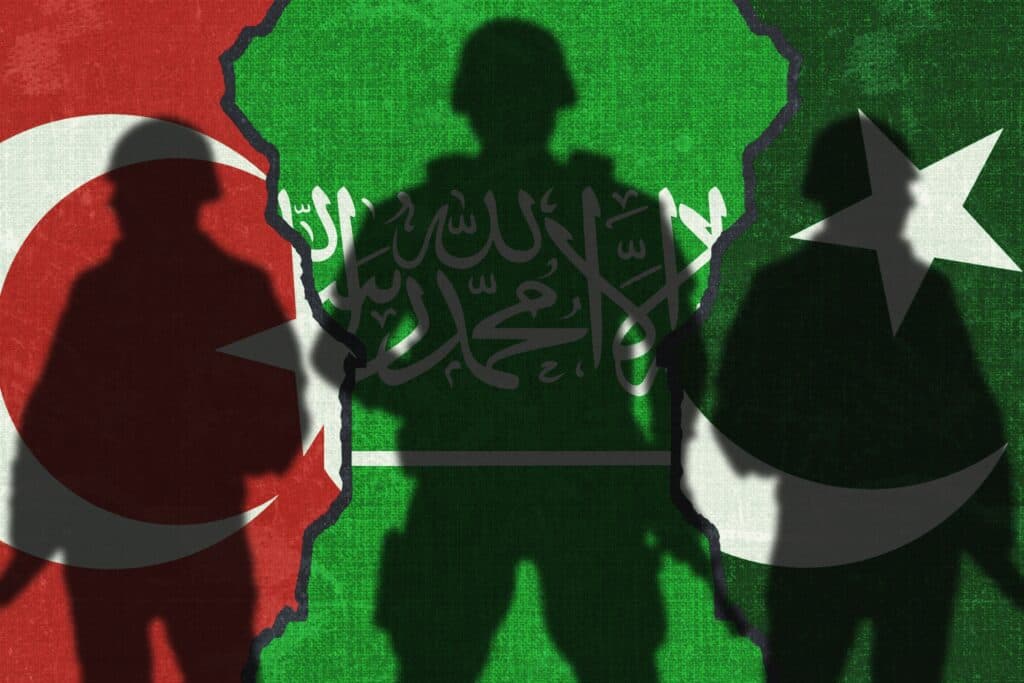
The Mecca Defense Agreement will enter a new operational phase Monday when Turkey, Saudi Arabia, and Pakistan hold their first committee meeting in Istanbul. Senior officials will discuss military coordination, defense production, counterterrorism, and the alliance’s institutional structure. The meeting comes weeks after the three powers established a collective defense framework amid growing regional instability.
Ecclesiastes 4:12 observes that “a threefold cord is not quickly broken.” The image is particularly fitting for an alliance built around three nations combining military, economic, and industrial strength. Yet the durability of such a cord depends on the direction its members choose to pull.
Mecca Defense Agreement Moves From Pact to Practice
Foreign and defense ministers from all three countries are expected to attend Monday’s meeting. Their military chiefs of staff will also participate. Reuters reported that discussions will focus on interoperability, joint defense capabilities, and deeper defense industry cooperation. Joint production and development are also expected to feature prominently.
The agreement was signed in Mecca on August 7. Its central provision states that an armed attack against one member will be treated as an attack against all three. That principle resembles NATO’s Article 5 collective defense clause, although the governments have stressed that the new pact does not replace their existing alliances.
Turkey brings NATO’s second-largest military and a rapidly expanding defense industry. Pakistan contributes extensive military experience and nuclear capability, while Saudi Arabia adds major financial resources and regional influence. The three governments have described the pact as defensive and have said it is not directed against any specific country.
A New Security Architecture Takes Shape
The alliance emerged during a period of intense upheaval across the Middle East. Reuters reported that all three members have concerns about the military posture of both Iran and Israel. Iranian missile attacks on Gulf states during the current war have also increased pressure for stronger regional defense arrangements.
Questions about the alliance’s eventual membership are already emerging. In “Mecca Defense Agreement: Iran Says Invitation Under Review,” Iranian official Mehdi Rahimi said Tehran had received an invitation to join and was considering the proposal. Iran’s Foreign Ministry later said it had received no official invitation, although discussions about regional security had been proposed.

Turkey has also said the Mecca Defense Agreement remains open to expansion, with Egypt discussed as a possible future member. That makes Monday’s meeting important beyond the immediate question of military coordination. The institutions created now could shape how the alliance operates if more states eventually join.
Washington and Jerusalem will have reason to watch that process closely. Two members, Saudi Arabia and Turkey, retain major strategic relationships with the United States, while Turkey remains inside NATO. Israel, meanwhile, must assess how a powerful new regional defense structure develops and whether its collective capabilities ultimately strengthen stability or create new strategic pressures.
Strength, Alliance, and Responsibility
American and Israeli covenantal traditions share a strong belief that national strength carries responsibility before God. Both place value on protecting life, resisting aggression, preserving liberty, and building alliances that deter war rather than invite it. Security is not simply the possession of military power. It also depends on the moral purpose governing how that power is used.
The Mecca alliance illustrates that principle on a regional scale. Cooperation against terrorism and aggression can strengthen stability when it protects sovereign nations and civilians. The same military architecture can become dangerous if collective power is redirected toward ideological confrontation or hostility against neighboring states.
That distinction matters deeply to both America and Israel. Each has built security partnerships around the belief that deterrence is strongest when allies are capable, prepared, and committed to defending life. As the Mecca Defense Agreement moves from signatures to actual military coordination, its long-term significance will depend on what its members choose to defend and what threats they choose to confront.
For more stories on Israel, faith, and the values behind the headlines, follow Sinai on Facebook and Instagram.
Discussion0
No comments yet — be the first to share your thoughts.