Israel Weighs Negev Farms Around Air Force Bases
Israel is considering agricultural farms around Air Force bases in the Negev to strengthen land control, protect open areas, and support national defense

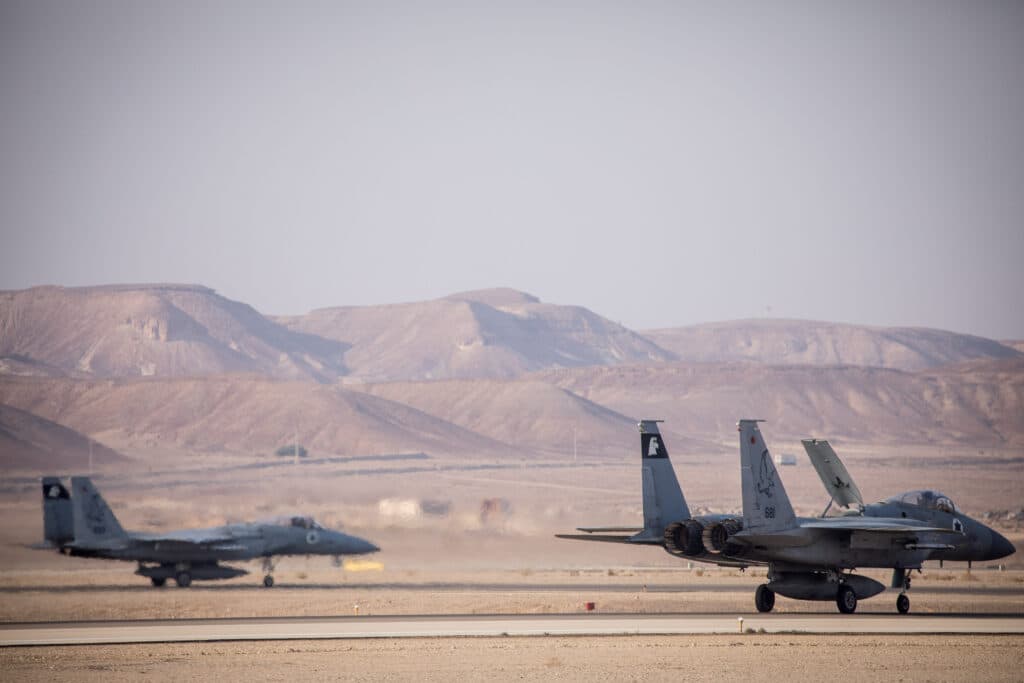
Israel is considering Negev agricultural farms around Air Force bases as part of a broader security concept linking agriculture, land control, and protection of strategic sites.
Avi Meir, Director General of the Ministry for Settlement Affairs, spoke at the Security Forum of the Association of Farms and said his ministry had received a request to examine agricultural farms around the Air Force base in Nevatim.
“We received a request to examine the establishment of agricultural farms around the Air Force base in Nevatim,” Meir said. “We are also moving forward with the eastern axis and the Arava. We already understand what we are up against.”
The Tanakh says that God placed man in the garden “to work it and guard it.” That phrase captures the deeper idea behind the policy: land is not protected only by fences, but also by rooted life.
Negev Agricultural Farms
According to Meir, the cooperation that began with Central Command is now expanding to the Air Force He said the plan fits a security concept that sees agricultural farms as “a significant component in strengthening control of the land and protecting the open areas.”
For Israel, the logic is direct. Air Force bases in the Negev are not ordinary infrastructure. They are strategic assets. Nevatim, in particular, carries major military importance for Israel’s air power and national defense.
Therefore, strengthening the open areas around such bases can serve both civilian and military goals. Farms create presence, employment, observation, land use, and a stronger connection between national defense and regional development.
Security Through Settlement
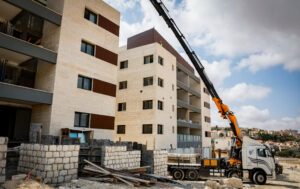
This issue also connects to “Major Boost for the North: Israel Approves Nearly 20B Shekel Aid Package.” Israel approved a nearly 20B shekel plan to strengthen northern frontline communities through safe rooms, shelters, health care, roads, jobs, tourism, and tax benefits.
Together, the two stories show a wider Israeli strategy. In the north, the state is investing in communities that face Hezbollah’s threat. In the Negev and Arava, officials are looking at agriculture as a tool for control, resilience, and long-term security.
For the United States, the concept is relevant because America also understands the link between strategic infrastructure and civilian resilience. Bases, farms, transportation routes, energy sites, and border regions all form part of national defense. In addition, a stronger Israeli Negev supports U.S. interests. Israel remains America’s key regional ally, and its air power helps deter Iran, Hezbollah, Hamas, and other hostile forces.
Covenant Of Land, Defense, And Stewardship
The United States and Israel share a covenantal understanding before God that gives land, freedom, and defense a moral purpose. Both nations were built by people who believed that open land must become rooted life. Both understand that sovereignty requires work, sacrifice, and the courage to defend what has been built.
America carries a calling to defend liberty under God across a vast homeland. Israel carries the ancient calling of Jewish return, sovereignty, and life in the land promised to the Jewish people. In this story, those shared values meet in the Negev.
Israel is not only placing soldiers around bases. It is considering farmers, families, roads, fields, and daily presence as part of national security. That approach reflects a simple truth: a country protects its land best when its people live on it, work it, and refuse to abandon it. For America, the lesson is familiar. Strong nations do not separate security from settlement, infrastructure, and production. For Israel, the Negev remains part of the Zionist mission itself.
Ultimately, the proposal around Nevatim shows how Israel thinks beyond the next battle. It is building depth, presence, and resilience around the places that defend the Jewish state.
For more stories on Israel, faith, and the values behind the headlines, follow Sinai on Facebook and Instagram.
Discussion0
No comments yet — be the first to share your thoughts.