Hebron: Gateway to the Garden of Eden
But why was Abraham so adamant about purchasing this specific plot of land?

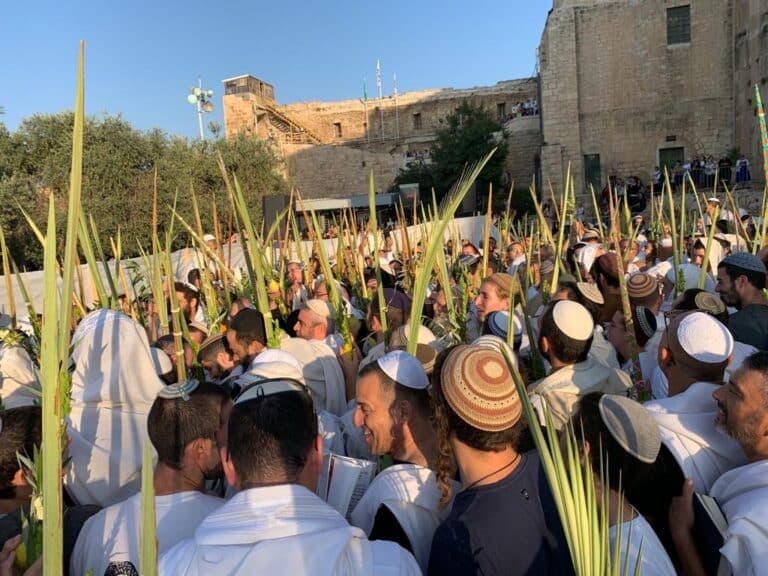
Throughout the book of Genesis, the city of Hebron (also called Kiryat-Arba) appears prominently.
After the death of Sarah, his beloved wife, Avraham went to the Hittites living in Hebron, also known as Kiryat-Arba. He spoke with them, saying: “If it be your wish that I should bury my dead out of my sight, entreat for me to Ephron the son of Zohar that he may sell me the cave of Machpelah, which he owns, which is at the end of his field; let him sell it to me for the full price in your presence as a burial place.” (Genesis 23:8-9)
An intriguing transaction ensues. Ephron initially offered to give Abraham the land as a gift. After Abraham insisted on paying, Ephron set an exorbitant price of 400 silver shekels. Abraham paid it without hesitation, signifying the importance of this holy purchase. “‘Listen to me; a piece of land worth four hundred shekels of silver—what is that between you and me? Bury your dead.'” Abraham agreed and paid Ephron in full, in the hearing of the people of the land. (Genesis 23:15-16)
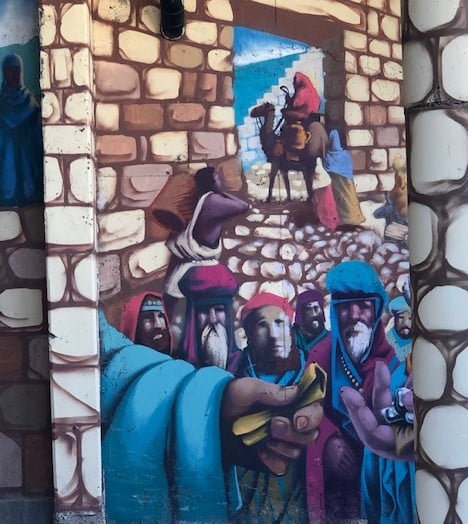
But why was Abraham so adamant about purchasing this specific plot of land? Jewish tradition tells us that Abraham knew the cave of Machpelah was the burial site of Adam and Eve, making it a gateway to the Garden of Eden. This holy place would become the burial site of the patriarchs and matriarchs: first Abraham and Sarah, then Isaac and Rebekah, and finally Jacob and Leah.
The Bible specifically mentions that this was a “double cave” — Machpelah, meaning “double.” There are two possible explanations for this. First, it may refer to the fact that four “couples” were buried there.
Archaeological digs in the surrounding area have revealed a number of shafts with niches on each side. The ancient method of burial was to place the bodies of the deceased using the shaft, which had spaces for their spouses beside them. Over time, as family members passed away, the shaft continued to be used, with more niches for other relatives.
However, if you visit the site of the Cave of Machpelah today, you won’t find a cave at all. Instead, there is a large, impressive building covering the traditional burial site. This structure was built by King Herod, an unpopular ruler known for his efforts to win favor with the Jewish people. He constructed monumental buildings, including this one, which was built at a similar time, with the same materials and workforce as the Holy Temple in Jerusalem. The building today reflects a tangible glimpse into what the House of God might have looked like!
The minimal explorations that have been done there since the 6 Day War in 1967 have revealed that there is a double cave underneath the main level where visitors can go.
The site is under strict security, as it is located in Hebron, now a Muslim-dominated city. Because of this, Jewish access to the Cave of Machpelah is generally limited to the rooms dedicated to Abraham and Sarah, and Jacob and Leah. The tombs of Isaac and Rebekah are restricted to Jewish visitors, who may only enter them on ten days out of the year.
Upon visiting, one enters through a central courtyard, passing the Beit Midrash (study hall), which is a place for prayer and study. In the courtyard, there are prayer books and charity boxes, reminders of the enduring faith of the Jewish people. The architecture shows influences from the Mamluk period (14th century), as seen in the decorative markers surrounding the graves. Although no markers remain for Adam and Eve, their eternal legacy, along with that of the other patriarchs and matriarchs, rests deep within the holy soil the land, beneath the building.
The Cave of Machpelah stands as a place of deep historical and spiritual meaning, housing the earthly remains of the four couples who shaped the faith, culture, and history that have profoundly impacted all who follow the God of Abraham, Isaac, and Jacob.
Watch this remarkable prayer that took place early in the morning in the hall of Isaac and Rebecca on one of the ten days in which Jews are able to go inside. The prayer is called Hallel; it is made up of various chapters of Tehillim (Psalms) and recited on many Jewish holidays.
Esti Herskowitz is a licensed tour guide in Israel. Contact her for tours of Hebron or other impressive biblical sites at Esti.h.tours@gmail.com
Discussion0
No comments yet — be the first to share your thoughts.