Haredi Draft Debate: Bennett Vows “No Exceptions”
Naftali Bennett vowed to draft every eligible ultra-Orthodox man if reelected, reigniting Israel’s debate over Torah study, military service, and shared national responsibility

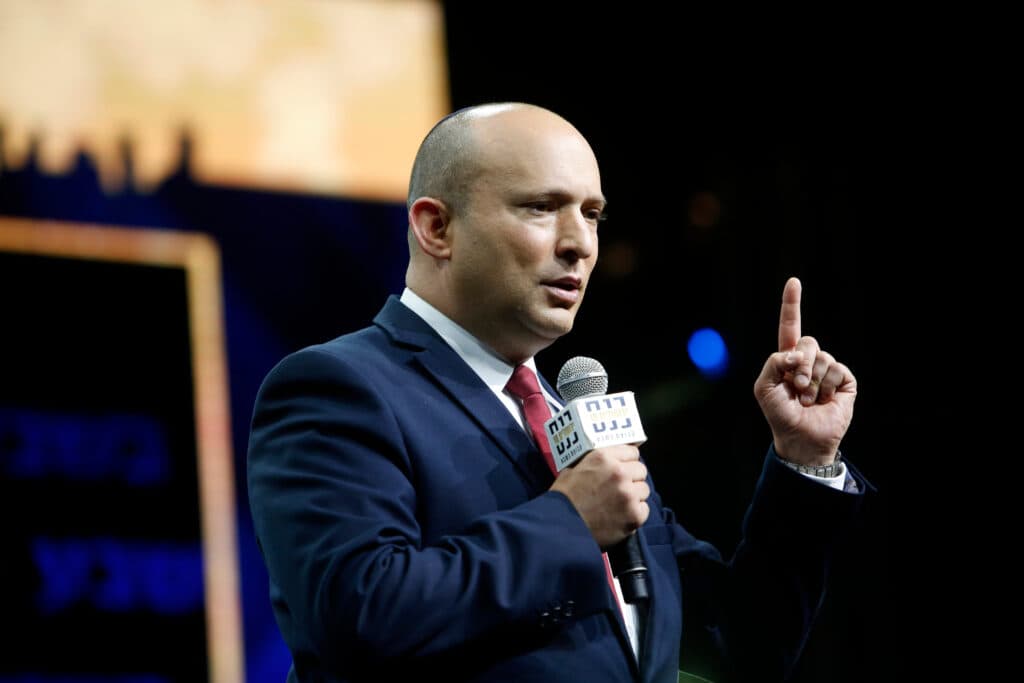
The Haredi draft debate returned to the center of Israeli politics after former Prime Minister Naftali Bennett vowed to end broad religious exemptions from military service if reelected.
Bennett said every ultra-Orthodox man eligible for service would be drafted. He argued that Israel faces a serious manpower shortage, with the IDF short about 20,000 troops while roughly 100,000 healthy Haredi young men remain outside the military.
“We will draft everyone. No exceptions and no compromises,” Bennett vowed.
The debate touches one of Israel’s deepest civic and religious disputes. For decades, many ultra-Orthodox men studying in religious institutions have received exemptions from military service. Haredi leaders have argued that Torah study itself contributes to the survival and stability of the Jewish state.
Ecclesiastes says there is “a time for war, and a time for peace.” In Israel, that tension is not abstract. It lives inside families, yeshivas, army bases, coalition talks, and the question of how a Jewish state balances Torah, security, and shared responsibility.
Haredi Draft Debate
Bennett’s position frames the draft issue as a matter of national sustainability. Israel has fought for years across several fronts, while reserve soldiers have carried an unusually heavy burden.

Supporters of expanded Haredi enlistment argue that the current model places too much pressure on a smaller part of Israeli society. They say the IDF’s manpower needs require a wider draft pool, especially after the wars in Gaza, Lebanon, and other fronts.
Ultra-Orthodox parties and religious leaders view the issue differently. They argue that full-time Torah study is not merely private religious life. In their view, it protects the Jewish people spiritually and preserves the foundation of Jewish continuity.
That disagreement explains why the issue has remained politically explosive for decades. It is not only a technical debate over manpower. It is a clash over the meaning of service, sacrifice, Torah, and citizenship in a Jewish state.
Security Needs And Political Pressure
The renewed debate comes as Israel faces heavy security demands. The earlier article “Gaza Demilitarization Teams Agreed Before Reconstruction” reported that the Prime Minister’s Office said Israel and the Peace Council agreed to create working teams on Gaza demilitarization and public health before reconstruction begins.
That context matters because Gaza, Lebanon, Judea and Samaria, Syria, and Iran all shape Israel’s manpower discussion. When the country faces overlapping fronts, political arguments over military service become harder to separate from national security planning.
At the same time, the draft debate carries real social consequences. Haredi communities fear state coercion against their way of life. Secular, traditional, religious-Zionist, Druze, and other serving communities often ask why the burden does not fall more evenly.
Bennett is now placing that question at the heart of his political message. Whether his proposal can become policy depends on elections, coalition arithmetic, court rulings, and the IDF’s capacity to absorb more Haredi recruits.
Covenant Of Torah And Responsibility
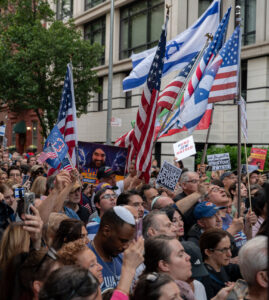
The United States and Israel carry separate covenantal missions before God, and both wrestle with the meaning of service. America’s civic tradition ties freedom to responsibility, with military service honored as one expression of national duty. Israel’s covenant is older and more specific: Torah, peoplehood, land, defense, and survival all meet inside one national story.
That is why this debate cannot be reduced to a slogan. Torah study has preserved Jewish identity across exile and persecution. Military service protects Jewish sovereignty in a region where enemies still seek Israel’s destruction.
Israel’s challenge is to hold those truths together without tearing its society apart. Bennett’s pledge gives one clear political answer. Haredi leaders offer another. The voters will now judge which vision can carry Israel through the next stage of war, recovery, and national responsibility.
For more stories on Israel, faith, and the values behind the headlines, follow Sinai on Facebook and Instagram.
Discussion0
No comments yet — be the first to share your thoughts.