Ahmad Hassoun Sentence Marks Syria Accountability Test
Reports say a Syrian court sentenced former Assad-era grand mufti Ahmad Hassoun to life imprisonment, raising questions about accountability, reform, and Israel’s security concerns

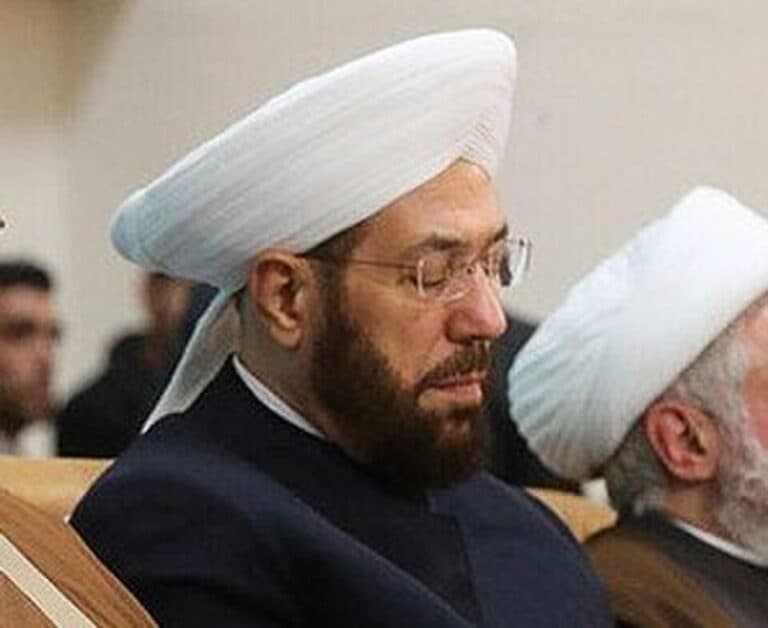
The Ahmad Hassoun sentence marks a major test for Syria’s new government, after reports said a Syrian court sentenced the former Assad-era grand mufti to life imprisonment.
Hassoun was one of the most recognizable religious figures under Bashar Assad. He served as Syria’s grand mufti and became known to many opponents of the regime as the “Mufti of Barrels,” a reference to the barrel bombs Assad’s forces used against civilian areas during the civil war.
According to reports, the Syrian court convicted Hassoun over his role in religiously justifying regime violence against Syrian civilians. He had faced charges connected to incitement, justification of killings, support for military operations against civilians, and backing figures accused of war crimes.
Deuteronomy commands, “Justice, justice shalt thou pursue.” Syria’s new rulers are now trying to show that this principle can apply after years of dictatorship, mass killing, and regime impunity. The question is whether justice will become a real national standard, or only a tool used against selected enemies of the new order.
Ahmad Hassoun Sentence
Hassoun’s case matters because he was not a battlefield commander. He was a religious authority. That made his words especially powerful during a war in which the Assad regime used state institutions, security forces, sectarian militias, and propaganda to crush opposition.
Syrian state media previously reported that Hassoun faced charges including inciting violence against civilians, supporting operations in eastern Aleppo and Idlib, and backing Russian and Iranian intervention in Syria.
His reported life sentence sends a clear message to Syrians who suffered under Assad: public figures who gave religious cover to brutality may also face judgment.
That is a positive step. A country emerging from civil war cannot rebuild only through slogans about unity. It must also confront the men who helped justify murder, torture, and mass displacement.
Syria’s New Government Still Faces Hard Questions
The case also comes at a sensitive moment for Washington and Jerusalem. The United States is moving toward removing Syria from the state sponsor of terrorism list, a major shift that could open the door to reconstruction, investment, and broader engagement.
That debate appeared in “Syria Terror List Removal Raises Israel Security Concerns.” The article noted that the U.S. move raises questions about Secretary of State Marco Rubio’s assessment, Syria’s new leadership, and Israel’s security concerns.

Hassoun’s sentence may strengthen the argument that Syria’s new government is taking some accountability steps. Trials of Assad-era figures show a break from the old regime and give victims a public forum.
However, the same government still faces serious doubts. Reports of sectarian violence, extremist influence, and uneven protection for minorities remain major concerns. Israel is also watching Syria’s military rebuilding, Turkish influence, and the risk that hostile forces could use Syrian territory again.
That is where Syria’s progress and its failures now sit side by side. Punishing an Assad-era figure is meaningful. But accountability at home must come with restraint abroad, protection for minorities, and real security guarantees near Israel’s borders.
Justice, Borders And Trust
The United States has an interest in a Syria that moves away from Assad, Iran, Russia, and ISIS. A stable Syria could weaken Tehran’s corridor to Hezbollah and reduce the chaos that allows terror groups to grow.
Israel has a narrower but more urgent concern. Jerusalem needs a Syria that does not become a staging ground for Iranian proxies, jihadist networks, or Turkish-backed military pressure near the border.
The reported Hassoun sentence therefore matters beyond one courtroom. It gives Washington evidence that Syria’s new government can move against Assad-era crimes. At the same time, Israel will not judge Damascus only by domestic trials. It will judge Syria by what happens near the Golan, at airbases, and across the military map.
A Covenant Measured By Justice And Restraint
The United States and Israel carry separate covenantal missions before God, and Syria’s transition tests both. America’s mission requires encouraging real justice while refusing to confuse courtroom symbolism with full reform. Israel’s mission requires guarding Jewish life while recognizing any genuine Syrian move away from Assad’s machinery of terror.
If Syria’s new government brings Assad-era criminals to justice, protects civilians, and cuts ties with hostile networks, it can begin a different chapter. If it punishes some old figures while allowing new extremism, foreign militias, or anti-Israel threats to grow, the old pattern will only return under new branding.
Hassoun’s reported sentence is a significant moment. It should be recognized as progress. But the real test for Syria will be whether justice becomes consistent, whether minorities can live safely, and whether Israel’s security lines are respected in practice.
For more stories on Israel, faith, and the values behind the headlines, follow Sinai on Facebook and Instagram.
Discussion0
No comments yet — be the first to share your thoughts.