A Moment of Courage: Faith
Every week, we continue our journey across the country to embrace and comfort bereaved families.

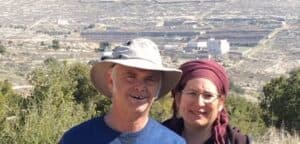
Every week, my husband Amichai and I continue our journey across the country to embrace and comfort bereaved families. Bereavement spares no one, and we meet families that are rich and poor, small and large. We visit sprawling homes in villages or moshavim, and at the same time climb to the fifth floor of a tiny apartment.
In one of the encounters, we met a family whose soldier son was killed on October 7, on that very day.
The story the mother told me deeply moved me, resonating so precisely with our own story.
The mother described her son, who was honored to serve as a combat soldier. Despite the demanding service, they spoke on the phone every day. Then came Simchat Torah. She knew there was a war in the south and was waiting to hear from her son that everything was fine. But the soldier did not make contact. A day passed, then two. The mother could hardly breathe. She had no air. She neither ate nor slept, turning the world upside down to find out where her son was. Only about five days later came the answer: he had been killed on the first day! But the identification process took time. Five days of terrible uncertainty!
The first words the mother said when she received the bitter news were: “Thank God. Thank God he isn’t a hostage or injured. Thank God he isn’t suffering. Thank God he died a hero, a fighter.”
This sense of gratitude in the depth of tragedy is something we also recognize.
We, too, thank God that Hallel was murdered but did not endure torture, did not suffer. Already during the “shiva” (the week in which we sit and focus only on mourning the deceased), I told my husband he must thank God for the good. In Judaism, there is a special blessing: HaGomel (the blessing of thanksgiving). My husband didn’t understand why. But when we reviewed Hallel’s murder, we realized that, amidst the pain, we also experienced miracles.
The terrorist murdered her and remained alive, waiting for my husband. There was a battle in the house, and my husband survived thanks to two brave friends who arrived with him and killed the terrorist. Our little daughters were also spared because they weren’t there at that moment.
This point of finding the inner place of gratitude is a strong point of faith that characterizes so many families this year. To believe in the good. To choose this narrative. It isn’t always simple or easy.
In Hebrew, the words “faith” (emunah) and “practice” (imun) share the same root and meaning. At first glance, it seems there’s no connection between the two: faith is of the heart, while practice is a practical act. But the language connects these words, telling us that to achieve inner faith, practice is required. It’s not easy, but it’s possible.
At first, an automatic thought arises. The thought is filled with pain, despair, helplessness, anger, and guilt—a mix of difficult emotions and challenging feelings. But then comes the practice—the pause and search for an alternative meaning. It’s possible to practice a language of finding the good, of gratitude. It’s possible to practice adopting a different perspective, to practice wearing rose-colored glasses instead of black ones.
This practice allows us to live.
Rena Ariel is a Jewish educator, leader, and role model for many in Israel and around the world. She is the mother of Hallel Yaffa Ariel, whose tragic loss to terrorism has further inspired Rena to promote initiatives that emphasize unity, faith, and the sanctity of life in the Land of Israel. Rena can be reached for lectures or visits to Kerem Hallel at yekev.arielbyehuda@gmail.com
Discussion0
No comments yet — be the first to share your thoughts.